

Do dentists actually recommend electric toothbrushes?
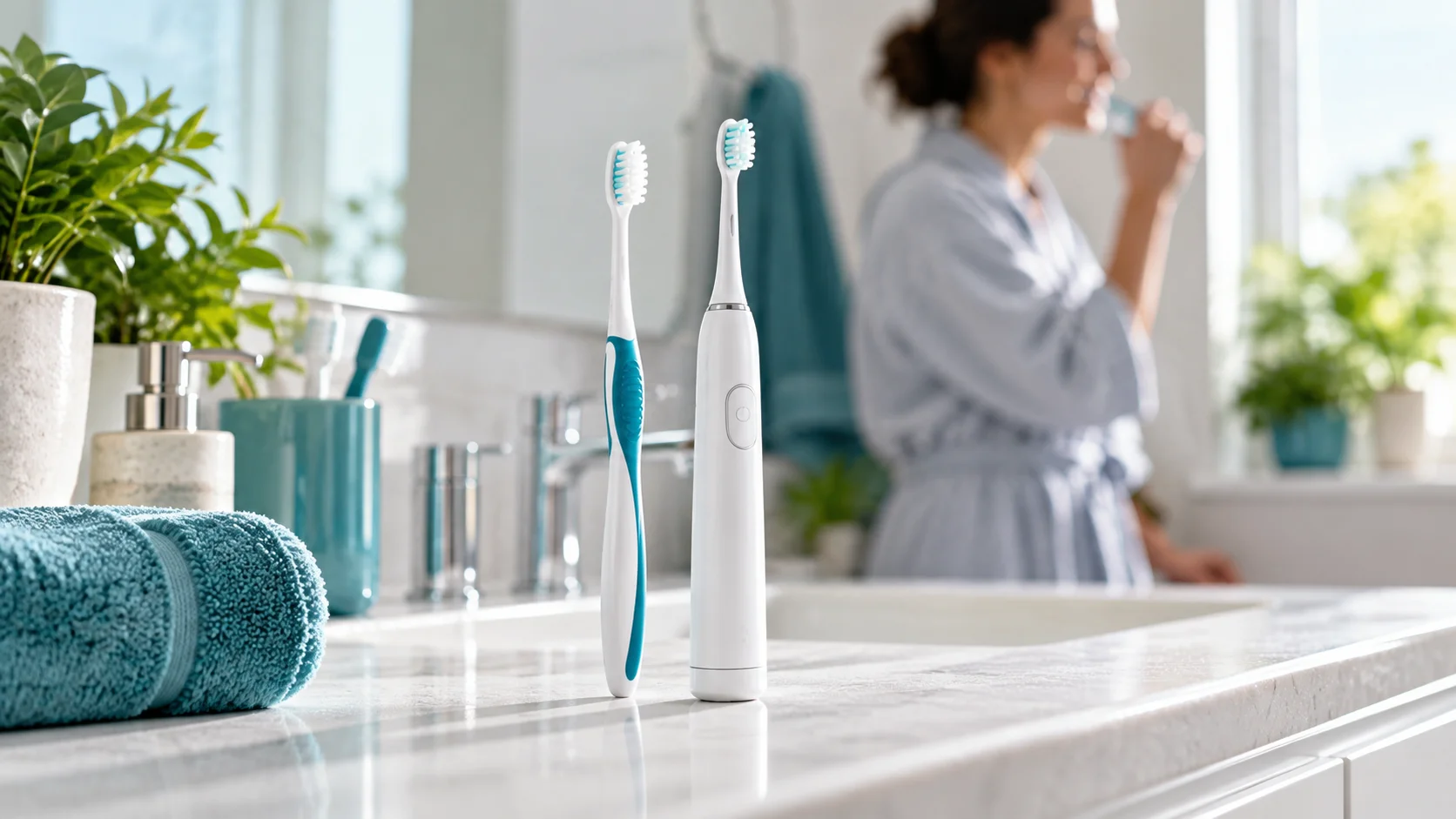
An unbranded manual and electric toothbrush shown side by side.
Yes, a dentist or hygienist may recommend an electric toothbrush for an individual patient, but UK guidance does not say that everyone needs to switch. The NHS says manual and electric toothbrushes can both work well when you clean every surface of your teeth and use fluoride toothpaste. Independent research has found modest average improvements in plaque and gingivitis with powered brushes, but that does not make a properly used manual toothbrush inadequate. [1][2]
What does the NHS say about electric versus manual toothbrushes?
Key takeaways
Both manual and electric toothbrushes can be effective when used thoroughly.
Powered brushes show modest average improvements in measured plaque and gingivitis in research, but the importance for long-term outcomes is less certain.
Choose a brush you can use consistently, clean all tooth surfaces and maintain within your budget.
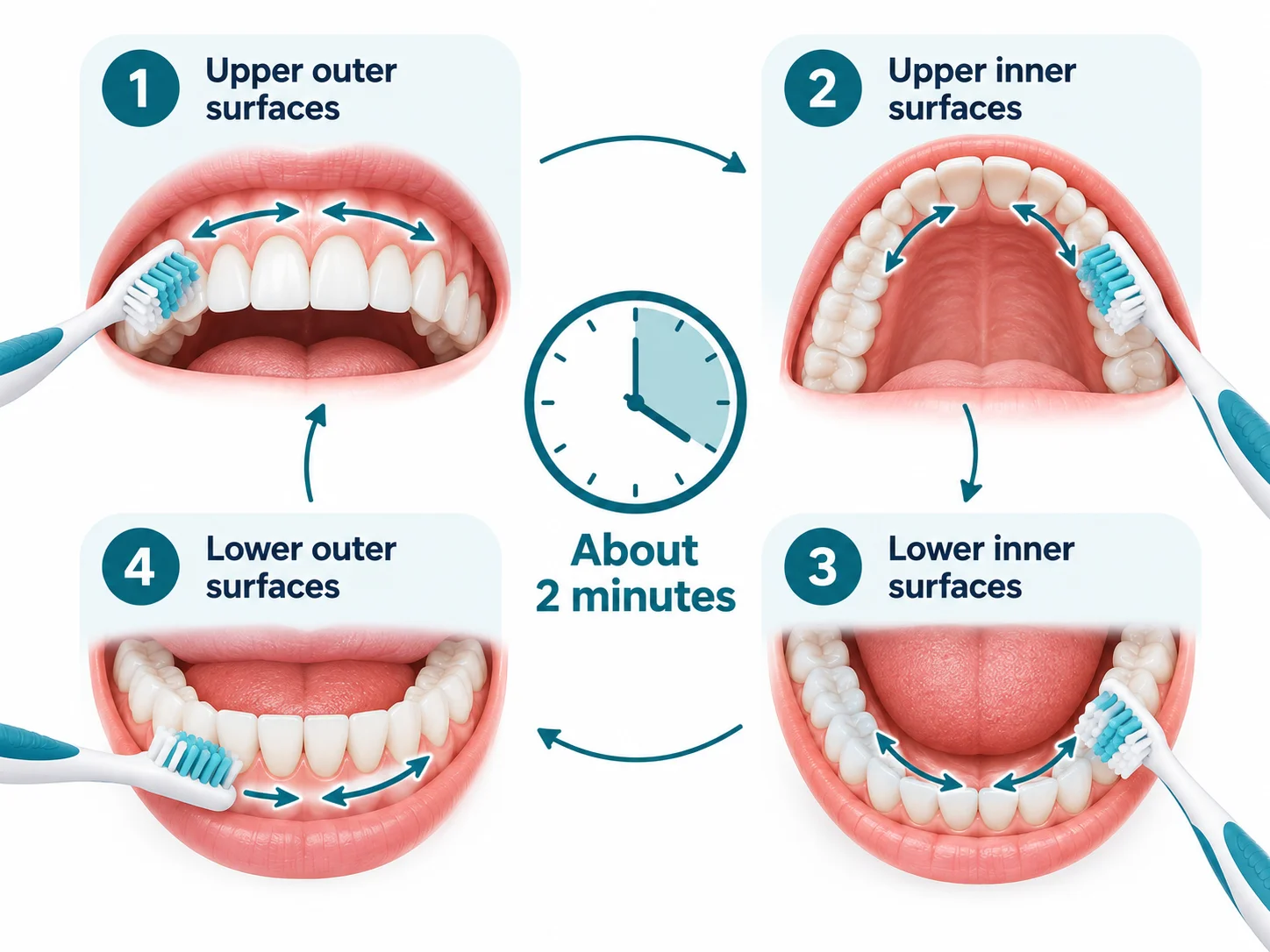
A visual guide to methodically covering the teeth during a two-minute brushing routine.
The NHS advice is clear: brush twice a day for about two minutes, including last thing before bed, use fluoride toothpaste and clean the inside, outside and chewing surfaces of every tooth. It says the type of brush matters less than brushing thoroughly, although some people find an electric brush easier to use. [1]
So there is no NHS rule that every adult must buy an electric toothbrush. The priority is an effective routine you can follow consistently.
What does the research say?
The Cochrane review of powered versus manual toothbrushes included 56 studies and 5,068 participants. Its evidence search ran to January 2014. The review found moderate-quality evidence that powered brushes reduced measured plaque and gingivitis more than manual brushes on average. [2]
At one to three months, the reported plaque index was reduced by about 11% and the gingivitis index by about 6%. In assessments after more than three months, the corresponding reductions were about 21% and 11%.
These percentages describe changes in the indices used in the studies; they do not mean 21% fewer cavities, 11% less tooth loss, or a guaranteed reduction in long-term gum disease. Cochrane said the long-term clinical importance of the results was unclear, and the studies varied considerably. [2]
The fair conclusion is that electric toothbrushes can have an advantage on average, but the size and practical importance of that advantage vary. A review of gum recession and abrasion published in 2026 found no clear difference in recession between manual and powered brushes, but rated the evidence very low certainty; it is not strong enough to claim that one type protects everyone’s gums better. [3]
Why might a dentist recommend an electric toothbrush?
A recommendation should relate to the person, not just the device. A dentist or hygienist may suggest trying an electric brush if plaque is repeatedly being missed, if a person finds the manual brushing action difficult, or if a powered handle makes it easier to clean all tooth surfaces. Some people with reduced hand dexterity or dental appliances may find a powered brush easier to handle, although the benefit depends on their own needs and technique. [1][4]
An electric toothbrush is not a treatment for gum disease and does not replace an examination, professional advice or cleaning between the teeth. If your clinician suggests switching, ask what problem they want it to help with and how you should use it.
Can a manual toothbrush clean teeth properly?
Yes. The NHS says a manual toothbrush can be just as good when you clean all tooth surfaces and use fluoride toothpaste.
Choose a head that is comfortable to manoeuvre and bristles suitable for you; the NHS says medium or soft bristles suit most adults. Brush gently and spend about two minutes on the whole mouth. [1]
If you already brush thoroughly twice a day and your dentist is happy with your plaque control, there is no need to switch simply because electric models are heavily promoted. Technique and consistency matter more than buying a feature-rich device.
Are electric toothbrushes worth the cost?
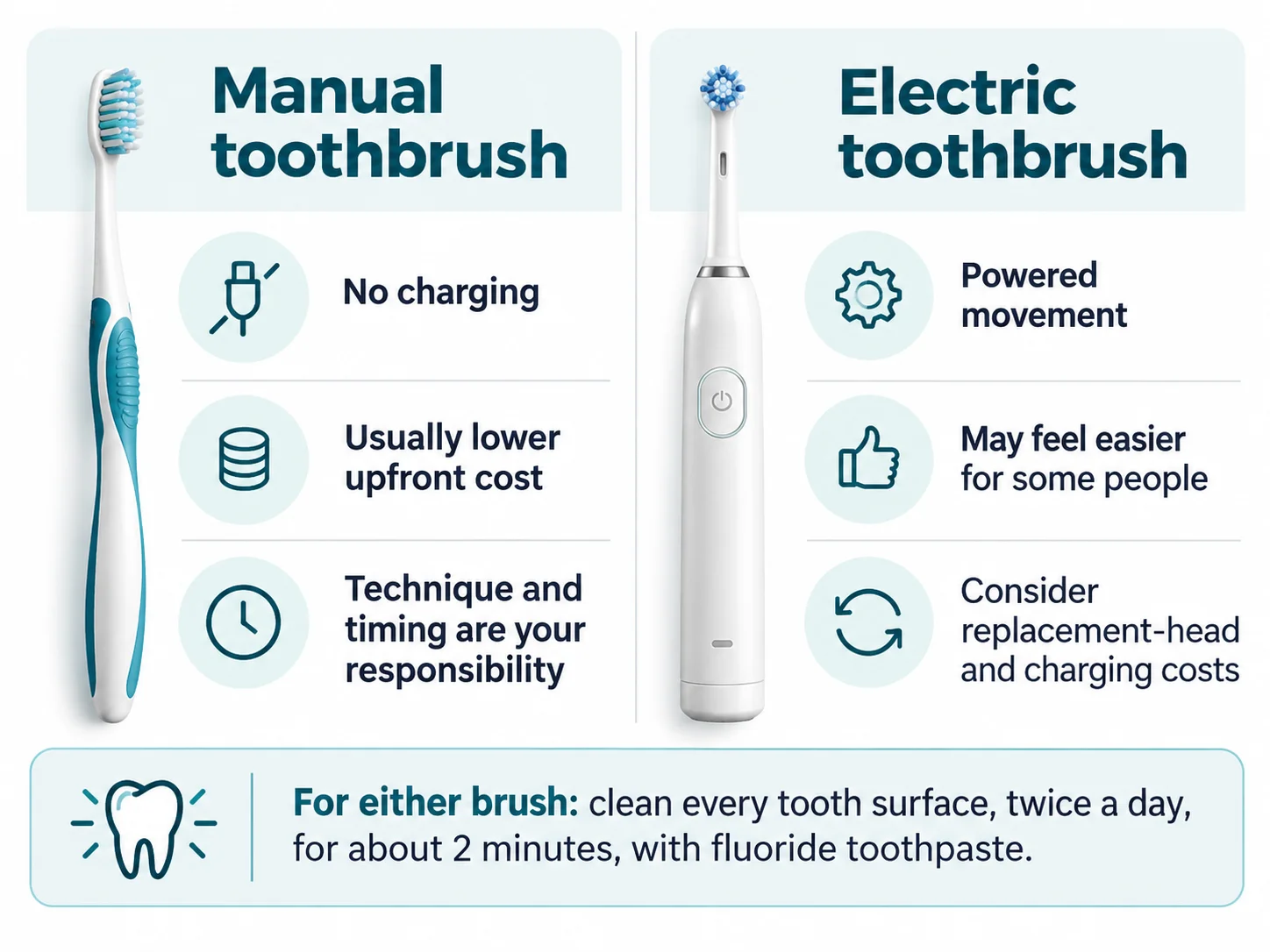
Practical considerations when choosing between a manual and electric toothbrush.
They may be worth it if the powered movement helps you brush more thoroughly, makes the routine easier, or helps you stay with the recommended brushing time. A basic model may be sufficient; the evidence reviewed here does not establish that an expensive app-connected brush is necessary for good oral hygiene.
The trade-offs are the higher initial outlay compared with many manual brushes, replacement-head costs, charging or battery needs, and the possibility that a particular handle or sensation will not suit you. Replacement heads may also be specific to a brush family. No live UK price comparison was carried out for this article, so it deliberately does not quote prices.
Do timers and pressure sensors matter?
A two-minute target is part of NHS advice, so a built-in timer can be a convenient reminder. You can achieve the same timing goal with a separate timer if you use a manual brush. A pressure sensor may prompt you to ease off if you tend to press hard, but it is an optional aid—not a requirement in NHS guidance and not proof that a particular model will produce better long-term dental outcomes.
Whichever brush you choose, follow its instructions, avoid scrubbing aggressively, and make sure you reach every surface. Do not assume a timer or sensor compensates for areas you regularly miss.
How should you decide whether to switch?
Ask yourself three questions:
Am I brushing for about two minutes, twice a day, and reaching every surface? If yes, a manual brush may be working well for you.
Is my current technique difficult to maintain? If holding a manual brush or controlling the movements is a challenge, ask whether an electric model could make the routine easier.
Will I be comfortable with the ongoing cost? Include replacement heads and charging or batteries, not just the purchase price.
If you are unsure, ask your dentist or hygienist to show you the areas you are missing and discuss whether changing brushes is likely to help. Persistent bleeding, pain, sensitivity or concerns about gum recession also deserve personalised advice rather than a purchase based on an online article.
FAQs
Do dentists recommend electric toothbrushes over manual ones?
Some recommend them for individual patients, but this research did not verify a reliable UK-wide survey showing how many dentists recommend electric brushes. NHS guidance accepts either type when used thoroughly with fluoride toothpaste. [1]
Are electric toothbrushes better than manual toothbrushes?
Cochrane found modest average reductions in measured plaque and gingivitis with powered brushes. The clinical importance of those index changes for long-term dental health was unclear, so the evidence does not mean every person needs to switch. [2]
Can a manual toothbrush clean teeth properly?
Yes. The NHS says manual and electric brushes can both be effective when you clean every surface and use fluoride toothpaste. Aim for two minutes twice daily and ask a dental professional to check your technique if you are unsure. [1]
Is an electric toothbrush worth it if my teeth and gums are healthy?
It depends on your routine and budget. If you brush thoroughly with a manual brush and your dental professional is satisfied with your plaque control, switching is optional. An electric model may be useful if it makes thorough brushing easier for you.
Do I need a pressure sensor or app?
No specific sensor or app is required by the NHS guidance cited here. These features may be convenient for some users, but they should be treated as aids rather than guarantees of better oral health. Focus first on regular, thorough brushing.
General information: This article is educational and does not replace advice based on an examination by a dentist or hygienist.
References
NHS — How to keep your teeth clean — page last reviewed 30 June 2025.
Yaacob M, Worthington HV, Deacon SA, et al. Powered versus manual toothbrushing for oral health. Cochrane Database of Systematic Reviews. 2014; Issue 6, CD002281.
Molina C et al. Influence of Manual and Powered Toothbrushes on Gingival Lesions: A Systematic Review and Meta-Analysis. International Journal of Dental Hygiene. Published online 3 May 2026.
Products to consider
Top-rated picks in this category, with the lowest UK price we currently track.
 Oral-B iO5 Electric Toothbrush, Matt Black, with Travel Case and Toothpaste
View review →
Oral-B iO5 Electric Toothbrush, Matt Black, with Travel Case and Toothpaste
View review →
 Oral-B Pro 3 3500
View review →
Oral-B Pro 3 3500
View review →
 Philips Sonicare 5300 Electric Toothbrush, Sonic Toothbrush with 2 Intensity Levels, Pressure Alert, EasyStart, SmarTimer and BrushPacer, White, Model HX7108/04 [New Technology]
View review →
Philips Sonicare 5300 Electric Toothbrush, Sonic Toothbrush with 2 Intensity Levels, Pressure Alert, EasyStart, SmarTimer and BrushPacer, White, Model HX7108/04 [New Technology]
View review →
Dr. Eleanor Vance, BDS
Dr. Eleanor Vance is a UK-registered general dentist with over 12 years of clinical practice in London and Surrey. She advises DailyDental on oral hygiene science, brushing ergonomics, and dental safety.